

A Comprehensive Guide to Nicotine Pouches: From Beginner to Expert
Leave a message
Understanding Nicotine Pouches
1.1 What Are Nicotine Pouches?
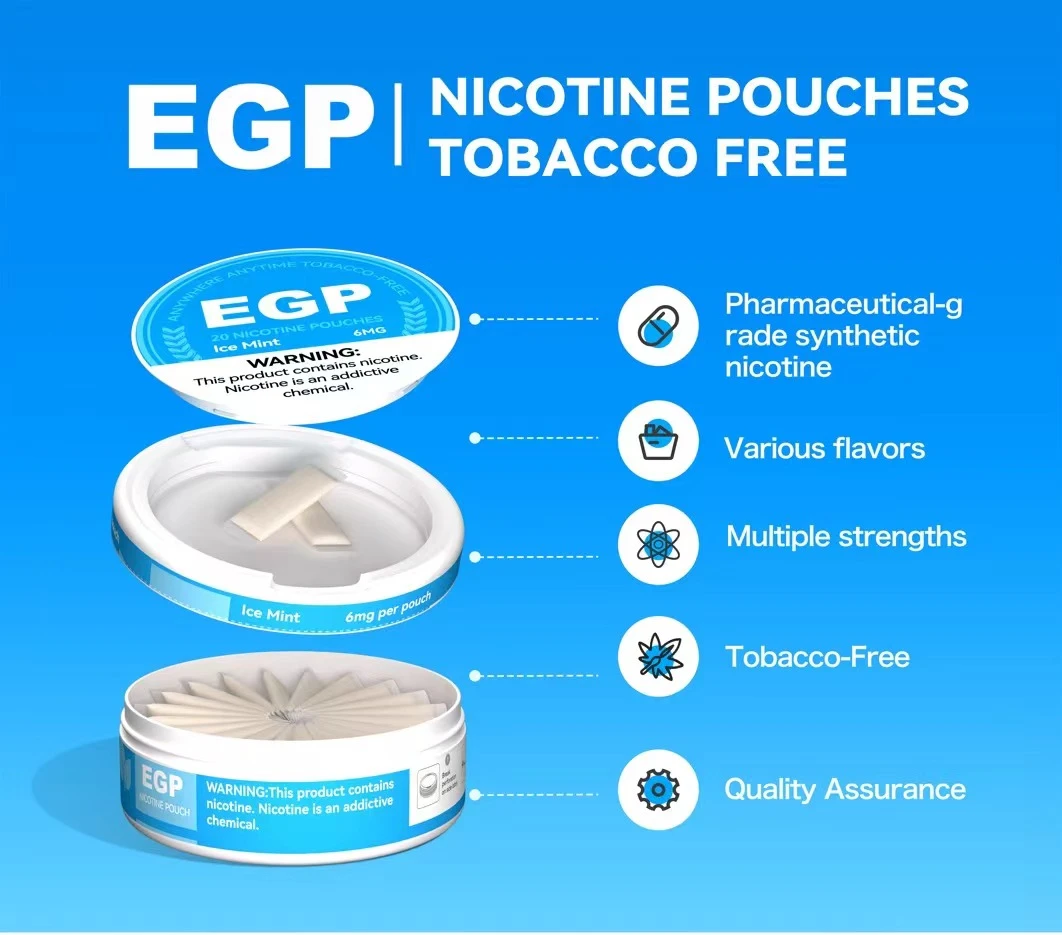
Nicotine pouches, also known as smokeless nicotine products, are portable consumer products that contain nicotine but no tobacco leaves. In terms of appearance, they are usually small square or round pouches, similar in size to common tea bags. The outer layer is mostly made of medical-grade non-woven fabric that is breathable and not easily damaged. The inner part is filled with a mixture of specially treated nicotine carriers, flavorings, stabilizers, and other ingredients. Among these, the nicotine carriers are mostly plant fibers or synthetic resins, which can stably adsorb nicotine and control its release rate. Flavorings include various flavors such as mint, fruit, and berries to meet the taste needs of different users. Stabilizers are used to ensure the stability and safety of the product's ingredients within the shelf life.
Compared with traditional tobacco products (such as cigarettes, cigars, chewing tobacco, etc.), nicotine pouches have significant differences. Firstly, they do not require combustion or heating, so no harmful gases such as tar and carbon monoxide produced by tobacco combustion are generated during use, fundamentally avoiding the direct damage of these harmful substances to the respiratory system. Secondly, they do not rely on tobacco leaves as a source of nicotine, effectively reducing problems such as pesticide residues and heavy metal pollution that may exist in the tobacco planting process. Finally, they have more flexible usage scenarios, do not produce second-hand smoke, and do not leave soot or smoke smell, so their impact on the surrounding environment and others is much smaller than that of traditional tobacco products.
1.2 The Development History of Nicotine Pouches
The origin of nicotine pouches can be traced back to the early 21st century in Europe. They were first developed by Swedish tobacco companies. Initially, the product was positioned as an alternative to traditional chewing tobacco to meet consumers' demand for a "smokeless and less harmful" way of nicotine intake. The early products had a single flavor, mainly mint, and there were few options for nicotine content. They were only sold in niche markets in Nordic countries such as Sweden and Norway.
With the gradual increase in consumers' demand for smokeless nicotine products, nicotine pouches entered a stage of rapid development after 2010. In 2013, a Finnish tobacco brand launched the first fruit-flavored nicotine pouch, breaking the limitation of traditional flavors and quickly attracting the attention of young consumer groups. After 2015, the product began to expand to other European countries (such as the United Kingdom, Germany, France). At the same time, the gradient of nicotine content became more abundant, and products from low doses (1mg per pouch) to high doses (more than 6mg per pouch) were launched one after another to meet the needs of users with different nicotine tolerances. Since 2018, the nicotine pouch market has begun its global layout. Countries such as the United States, Canada, Japan, and South Korea have introduced the product one after another. Some international tobacco giants have also entered this field through acquiring niche brands or independent research and development, promoting the technological iteration of products. For example, more efficient nicotine carriers are used to achieve "slow and continuous release" of nicotine and improve the user experience.
In China, the entry of nicotine pouches was relatively late. They only flowed into the market in small quantities through cross-border e-commerce platforms or purchasing channels after 2020. Initially, they were mainly aimed at niche groups with overseas living experience or interest in emerging nicotine products. Since China's regulatory policies on nicotine products have not yet formulated specific rules for nicotine pouches, most of the products circulating in the market are overseas brands, and sales are mainly online, with few offline physical channels. However, with the growth trend of the global smokeless tobacco market and changes in the demand of some domestic consumers for traditional tobacco substitutes, the market attention of nicotine pouches in China is gradually increasing. However, on the whole, it is still in the initial stage of market cultivation, and both product awareness and the scale of consumer groups need to be further developed.
II. The Working Principle of Nicotine Pouches
2.1 The Absorption Mechanism Through Oral Mucosa
The core working principle of nicotine pouches is to realize the process of nicotine entering the human circulatory system through "oral mucosa absorption". This mechanism is different from the "lung inhalation" of traditional cigarettes and belongs to a typical "transmucosal drug delivery" method. When a user places a nicotine pouch in the mouth (usually recommended to be placed in the gap between the gums and the lips, i.e., the buccal mucosa), the saliva in the mouth will gradually penetrate into the non-woven packaging bag and react with the mixture of nicotine carriers, flavorings, and other ingredients inside. The water in the saliva will dissolve the nicotine adsorbed by the carrier to form a nicotine solution.
At this time, nicotine molecules will enter the capillaries under the mucosa through the gaps between the epithelial cells of the oral mucosa (mainly the buccal mucosa and sublingual mucosa). The epithelial cell layer of the oral mucosa is relatively thin, and there is a rich capillary network under the mucosa. The wall of these capillaries has high permeability, so nicotine molecules can quickly enter the blood circulation system without going through the "first-pass effect" of the liver (i.e., the process in which drugs are metabolized by the liver before entering the systemic circulation). In terms of absorption speed, nicotine can be absorbed by the mucosa and enter the blood within 3-5 minutes after being placed in the mouth, and the nicotine concentration in the blood reaches its peak after 10-15 minutes, allowing users to feel the physiological reactions brought by nicotine, such as "refreshing" and "satisfaction".

The characteristics of this absorption mechanism are very obvious. On the one hand, the absorption efficiency is high and the effect is quick, which can quickly meet the user's immediate demand for nicotine and avoid the intake of harmful substances that may be accompanied by the absorption of nicotine through the lungs after the combustion of traditional cigarettes. On the other hand, the absorption process is relatively gentle, and the nicotine concentration in the blood rises steadily, without the "sharp rise and fall" that occurs with cigarettes, reducing the stimulation of the cardiovascular system caused by the sharp fluctuation of nicotine concentration.