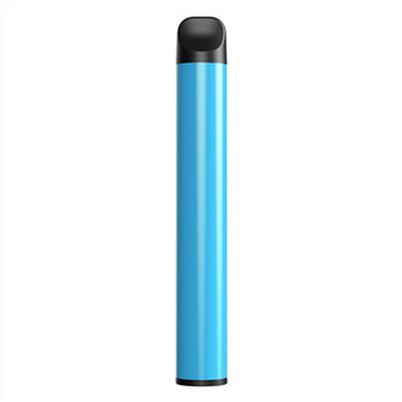


Some Places Ban The Sale Of E-cigarettes
Leave a message
On October 10, 2018, Hong Kong Chief Executive Carrie Lam said in her 2018 policy address that Hong Kong will ban e-cigarettes. [13]
On January 1, 2019, the newly revised "Hangzhou Regulations on Smoking Control in Public Places" (referred to as the "Regulations") came into effect. For the emerging electronic cigarettes, the "Regulations" clearly stipulate that smoking refers to inhalation and exhalation of tobacco smoke or harmful electronic cigarette aerosols. Therefore, no smoking places are not only prohibited from igniting tobacco products and smoking traditional cigarettes, but also smoking electronic cigarettes. [14]
On February 13, 2019, the Food and Health Bureau of the Hong Kong Special Administrative Region Government submitted the "Smoking (Public Health) (Amendment) Bill 2019" to the Legislative Council of the Hong Kong Special Administrative Region, proposing to ban the import, manufacture, sale, distribution, promotion of electronic cigarettes and other alternative smoking Products, offenders can be fined up to HK$50,000 and jailed for 6 months. [15]
On February 14, 2019, the "Shenzhen Special Economic Zone Regulations on Smoking Control (Revised Draft for Comment)" publicly solicited public opinions, and it is planned to include electronic cigarettes in the scope of tobacco control; bus stops and subway entrances and exits are included in non-smoking places; smokers smoke in non-smoking places Will no longer be discouraged, directly fined. [16]
In March 2019, WHO announced that second-hand smoke from e-cigarettes is a new source of air pollution. Compared with smokeless fresh air, second-hand aerosols in electronic cigarettes can cause PM1.0 values to be 14-40 times higher, and PM2.5 values to be 6-86 times higher. The nicotine content is 10 to 115 times higher. The acetaldehyde content is 2~8 times higher, and the formaldehyde content is 20% higher. Therefore, WHO recommends that all public places where smoking is prohibited should also prohibit the use of electronic cigarettes [17].
On June 26, 2019, the 34th meeting of the Standing Committee of the Sixth Shenzhen Municipal People's Congress passed the revised "Shenzhen Special Economic Zone Smoking Control Regulations" to include e-cigarettes in tobacco control management. [18]
On July 22, 2019, the Office of the Healthy China Action Promotion Committee held a press conference to introduce the tobacco control action of the Healthy China Action. The director of the Planning Department of the National Health and Medical Commission said at the meeting that the goal of the tobacco control action is to reduce the smoking rate of people over 15 years old to 24.5% and 20% by 2022 and 2030, respectively. To achieve the goal, multiple measures should be taken to control tobacco. In addition, he especially emphasized the need to pay attention to the harm of electronic cigarettes and reduce exposure to electronic cigarettes, and proposed that the National Health Commission is planning to regulate electronic cigarettes through legislation [19] .
The U.S. Department of Health and Human Services announced on September 11, 2019 that its drug administration will issue regulations in the next few weeks to ban the sale of non-tobacco-flavored e-cigarette products to control the growing number of teens vaping e-cigarettes. trend [5].
On September 18, 2019, India completely banned the production, import, export, sales and advertising of electronic cigarettes. This ban has been approved by the cabinet and will be officially promulgated in the form of an "executive order". The ban does not directly apply to vaping, but it means that Indian vapers will not be able to legally buy the products. Violators of the ban for the first time may be subject to a fine of approximately $1,400 or a year in prison, or both, and repeated violators may face up to three years in prison and a fine of nearly $7,000 [5] .
On September 11, 2019, local time, the White House announced that it would issue a ban on the sale of flavored e-cigarettes. On the same day, the head of the U.S. Food and Drug Administration also announced a move to remove flavored e-cigarettes from the market within weeks. In June 2019, San Francisco, California became the first city to ban the sale of e-cigarettes. Michigan announced on September 4 that it will ban the sale of flavored e-cigarettes in the state. New York State also announced a ban on the sale of flavored e-cigarettes in the state. [20]
October 23, 2019, the South Korean government on Wednesday advised people to stop using liquid e-cigarettes and vowed to speed up research to decide whether to ban the sale of such products; [21] October 27, South Korea GS25, CU, 7Eleven, Yimai De 24, etc., 4 representative convenience stores decided to temporarily suspend the sales of 4 kinds of liquid electronic cigarettes, and actively responded to the response of government policies. On October 28, the convenience store industry, which accounts for 70% of the electronic cigarette circulation network, decided to temporarily stop selling liquid electronic cigarettes. smoke [22].
On November 6, 2019, BOE told a reporter from the Beijing News that the company attached great importance to and resolutely supported the requirements of the State Tobacco Monopoly Administration and the State Administration for Market Regulation that "no sales of electronic cigarettes to minors". "We have blocked and gradually removed e-cigarette products from the shelves, fully cooperated with government departments and regulatory agencies in the management of e-cigarette companies, and continued to work on the protection of minors to contribute to regulating the healthy market of e-cigarettes." [ twenty three]
On November 7, 2019, Alibaba announced that it would close the e-cigarette stores on the platform and remove e-cigarette products from the shelves in accordance with the requirements of the Zhejiang Tobacco Monopoly Bureau. At the same time, it will ban the advertising of e-cigarette-related products. [twenty four]
On May 31, 2022, local time, the World Health Organization presented the 2022 World No Tobacco Day Award to Mexican President Lopez for his contribution to protecting the health of the Mexican people and actively controlling tobacco use. After accepting the award, Mexican President López signed an executive order declaring a ban on the sale and distribution of e-cigarettes in Mexico